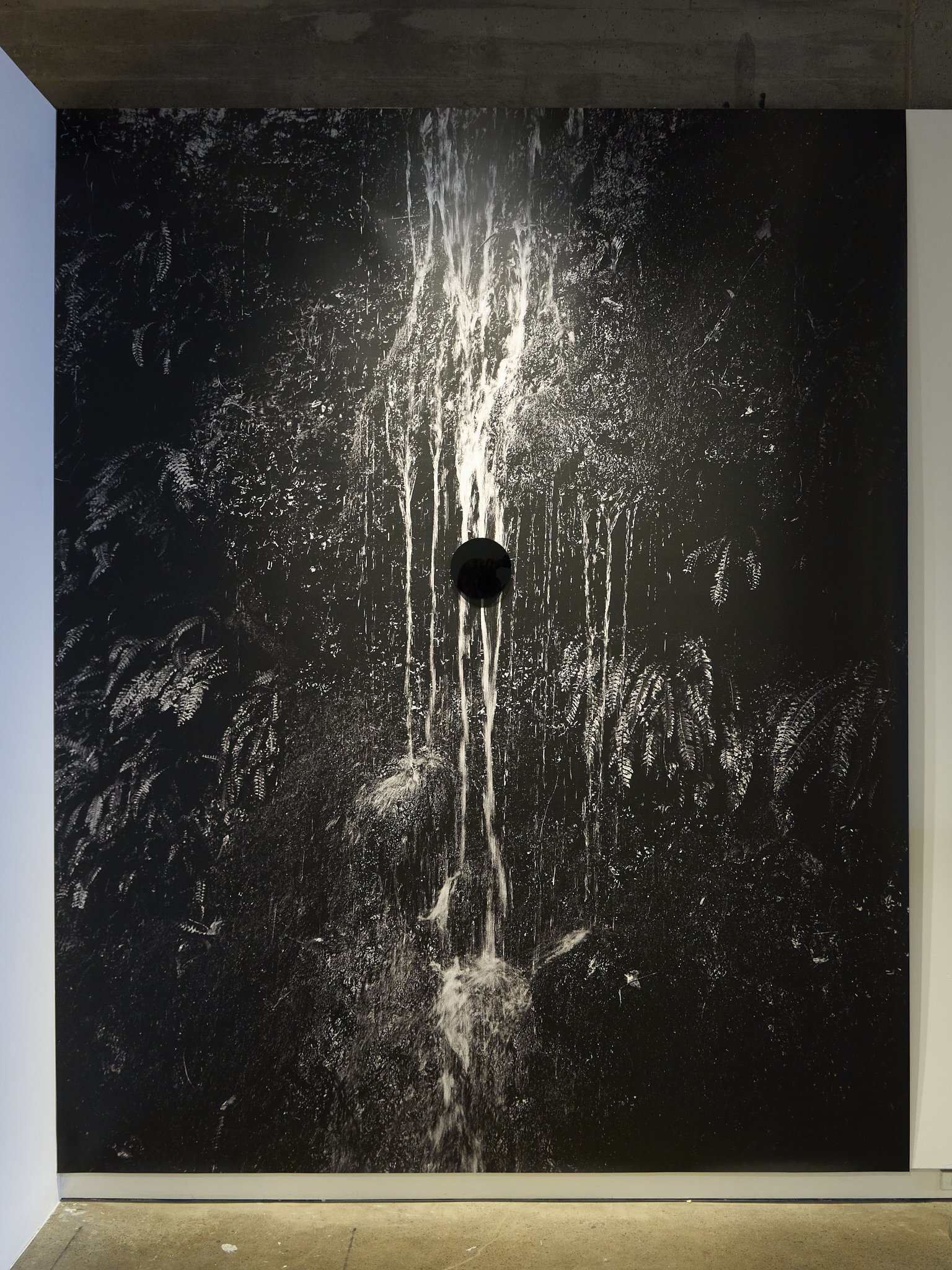
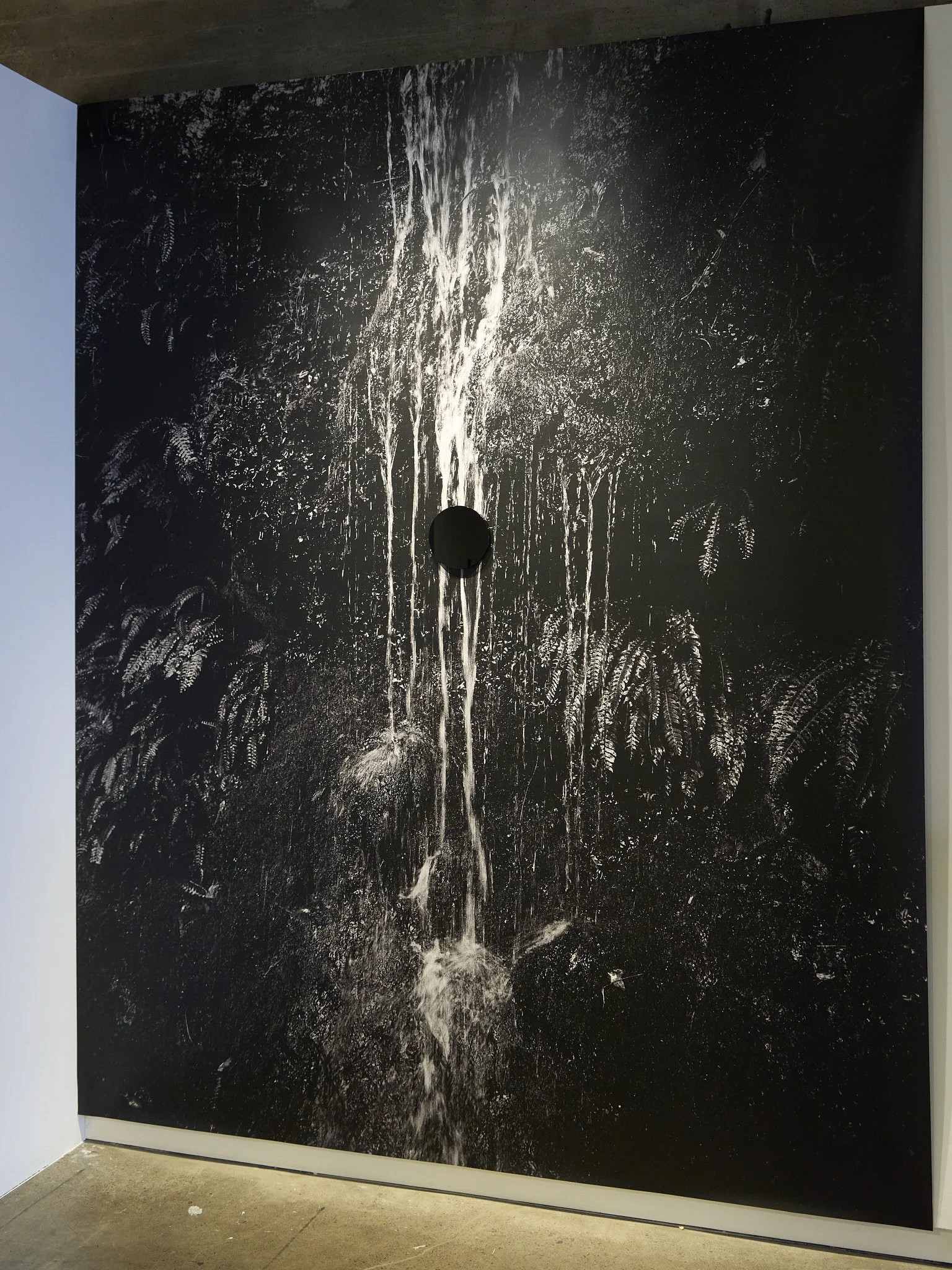
Counter View, Photographic print on synthetic, black obsidian glass, 2620mm x 2100mm. 2026.
The artwork is a black-and-white, large-scale, lifesize photograph of Newton’s Waterfall, in Aylmer Valley behind Akaroa. At eye height a circular piece of black obsidian glass is inserted into the photograph.
I wanted to photograph the waterfall in a classically picturesque way, enhancing the dark moodiness of the small pool it flows into. The waterfall drains from Misty Peaks Reserve catchment, within the Brasenose/Flag Peak area. Misty Peaks is derived from an old Māori name for the Brasenose/Flag Peak area - Ōteauheke, which translates as ‘the place where the mist comes down’. The area was originally covered with native forest and vegetation. Following European settlement, it was deforested and used as pastoral land for over a century. In the early 2000’s the Christchurch City Council bought the land with the intention of allowing it to naturally regenerate once again with native vegetation. I was interested in how the water then carried these multiple layered histories in this pluralistic post-colonial landscape, leading me to consider how my contemporary photograph of the waterfall was relevant and how to acknowledge and convey these histories.
Through this post-colonial lens, it felt appropriate to draw attention to ways of viewing these implied layers of meaning. I chose to reference the Claude glass; a historical viewing device popularised by the painter Claude Lorrain in the 17th century. It simplified colour and tonal quality, helping the painter to recreate the picturesque aesthetic of the ‘ideal’ landscapes of the time
In my artwork, the circular glass reflects the viewer rather than the landscape. This disrupts the view of the waterfall and challenges the viewer’s perception of this picturesque ideal landscape. Instead, the viewer is incorporated into the artwork and asked to consider their position in relation to the natural environment.
The work therefore asks us to question our relationship with, and responsibility towards, the future of the natural environment.
Previously my work had concentrated on regenerating environments as a symbol of hope – the hope that we can turn the ecological crisis around. Increasingly now I feel less hopeful and this work allows some of these concerns and anxieties to be expressed. Despite this sense of despair, I believe it is important to continue highlighting environmental issues through art. Keeps these issues visible, keeps them viable as subjects for discourse and action. If we become silent, then all hope is lost.